Materials · Making · Everyday life
Then & Now.
One plant.
Many useful lives.
In a wall. In a wardrobe. On a page. At the table. Explore six ways hemp connects objects from the past with materials and products today.
Choose a thread ↓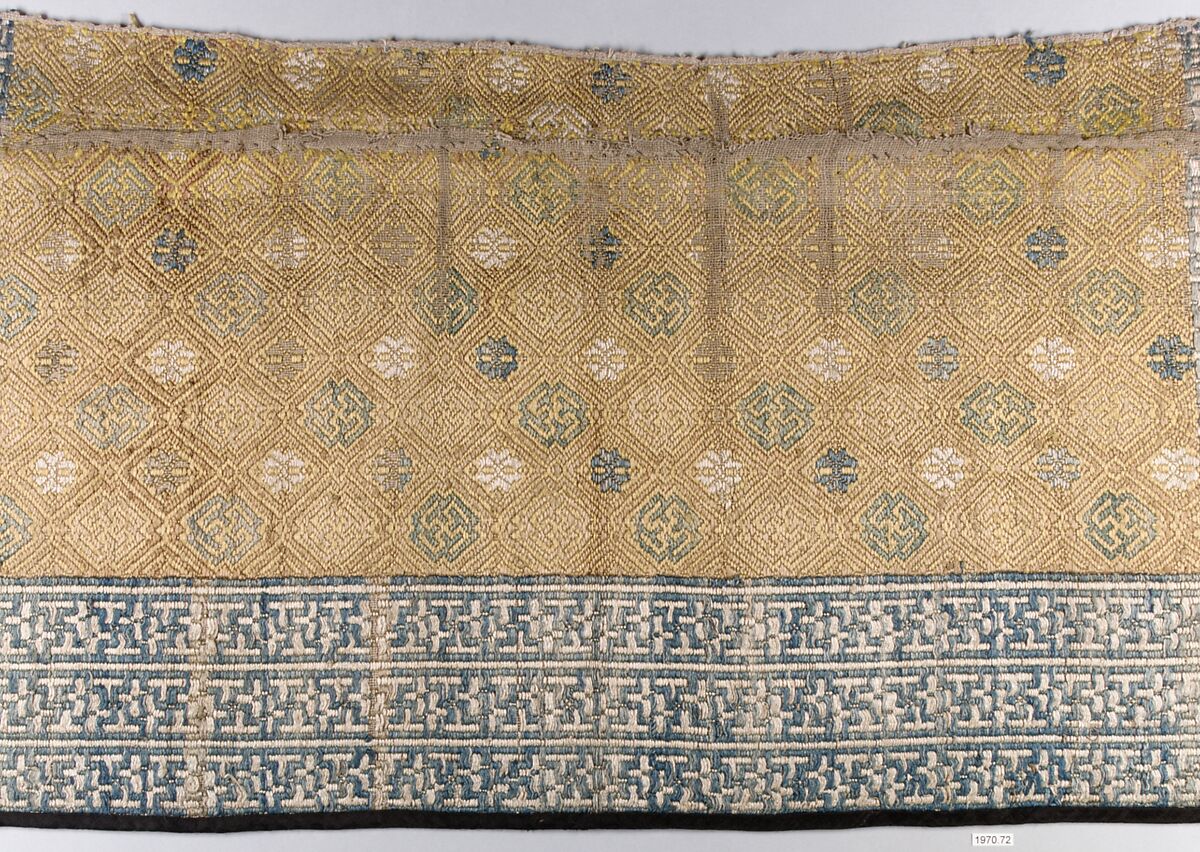
The Metropolitan Museum of Art · Public-domain image & record
A comparison, not a claim of continuous use
Each pairing starts with an identifiable object, document or study. “Now” includes both commercial applications and research, clearly labelled. The examples come from different places and periods.
Construction
From historic plaster to modern insulation.
Then · Ellora, India · sixth century CE
Then.
A 2016 study identified Cannabis sativa material in historic clay plaster at the Buddhist caves of Ellora, using microscopy and spectroscopy. It is evidence of hemp as a plaster additive at this site—not a reason to assume that every ancient building used it. [1]
Now · Building materials
Now.
Hemp-lime combines the woody core of the stalk with a lime-based binder. The International Code Council describes it as nonstructural insulation infill. The European Commission also lists hemp wool and fibreboard insulation among construction uses. [2]
The connection Plant material within a building fabric. Modern products still need an appropriate structural system and project-specific performance evidence.
Textiles
A useful fibre, woven into everyday objects.
Then · China · nineteenth century
Then.
The Metropolitan Museum of Art holds a coverlet fragment made with silk embroidery on a hemp ground. It offers a surviving example of hemp supporting a decorative household textile, rather than only heavy rope or sacks. [3]
Now · Fibre processing
Now.
Hemp continues to supply textile fibre. The European Commission identifies this as an established application. For makers, the route from stalk to usable yarn involves separating and preparing the fibre; fabric performance depends on processing and construction. [2]
The connection The fibre is a starting material. How it is prepared, spun, woven and blended shapes what the finished textile can do.
Clothing
From a surviving robe to contemporary workwear.
Then · Japan · eighth century
Then.
Tokyo National Museum’s Kesa robe (Funzou-e) is catalogued as hemp. Its pieces of cloth were layered and quilted together. The museum describes a garment made from reused rags: a concrete example of giving fabric another life. [4]
Now · Garments in production
Now.
Patagonia describes hemp blends in workwear and everyday clothing, combining the fibre with materials including organic cotton, recycled polyester and lyocell. This is a named manufacturer’s account of products in use, not a Green Nature 808 supply relationship. [5]
The connection Hemp clothing is not one texture or one fabric. Blends and finishing matter as much as the name on the fibre label.
Paper
From a mill trial to a printed photograph.
Then · United States · 1916
Then.
USDA Bulletin 404 investigated making paper from hemp hurds—the woody pieces left after fibre separation. Dewey and Merrill examined trials alongside collection, transport and commercial practicality. [6]
Now · A commercial example
Now.
Hahnemühle’s Hemp FineArt inkjet paper is specified as 60% hemp fibre and 40% cotton, at 290 gsm. It gives us a product with a defined composition and intended use, rather than a claim that hemp can replace every paper grade. [7]
The connection Different feedstocks and processes serve different paper products. The 1916 hurd trials and a modern fibre-blend sheet are related ideas, not identical recipes.
Fuel
From a lamp patent to a laboratory fuel.
Then · Patent published 1889
Then.
US Patent 397,011, for a lamp or night-light, explicitly lists hemp among vegetable oils considered for lighting. The document shows an identified historical application; a patent alone cannot tell us how widespread its use became. [8]
Now · Research demonstrated in 2010
Now.
Li and colleagues converted hempseed oil into biodiesel and tested fuel characteristics. Their paper reported a 97% product yield. This is evidence of technical feasibility, not proof of a large-scale or cost-competitive fuel industry today. [9]
The connection A source of oil can also be a source of energy. Whether that is its best use requires an assessment of cost, inputs, land use and competing uses.
Food & nutrition
From an excavated seed to a food ingredient.
Then · Northwest China · late seventh century
Then.
A study of plant remains from Chashancun, associated with a Tuyuhun royal descendant who died in 691 CE, identified hemp among the buried crops. The authors interpret it as part of supplementary plant subsistence. The find does not preserve a recipe or prove how much someone ate. [10]
Now · Seeds, oil & protein ingredients
Now.
Modern food ingredients include hulled hemp seed, hempseed oil and hemp protein powder. Research by House and colleagues measured protein content and digestibility in different hempseed products: whole seed, dehulled seed and meal are nutritionally distinct. [11]
The connection The form of the ingredient matters. Hempseed oil and CBD extracts are different products; claims about one should not be transferred to the other.
Yes, a version of that story exists in print. The source and the context matter.
Paul Carus’s The Gospel of Buddha, first published in 1894, includes the words “each day one hemp-grain only”. The 1915 edition places this within an account of six years of severe austerities. It goes on to describe emaciation and the abandonment of self-mortification as the path to enlightenment. [12]
Carus’s book is a later compilation and retelling, not an eyewitness record. The translation of Majjhima Nikāya 12 linked below instead discusses beans, sesame and a single grain of rice in its account of restricted eating. These are different textual accounts; we should not silently make them the same. [13]
The “40 days” version remains unverified in the sources checked for this feature. We include the story as religious and literary history. It is not evidence that one hemp seed can nourish a person for a day.
Keep exploring
Objects. Papers. Original records.
- M. Singh & M. M. Sardesai, Cannabis sativa (Cannabaceae) in ancient clay plaster of Ellora Caves, India, Current Science 110(5), 884–891 (2016). Author-uploaded paper. Archaeological material identification.
- European Commission, Hemp: applications. International Code Council, Appendix BL: description of hemp-lime construction. The code reference is a US example, not a statement of Irish building approval.
- The Metropolitan Museum of Art, Piece from Coverlet, China, nineteenth century, silk on hemp; accession 1970.72, gift of Robert Drummond, 1970. Opening image: museum Open Access, public domain.
- Tokyo National Museum / e-Museum, Kesa robe (Funzou-e), Nara period, eighth century, hemp. Museum catalogue description.
- Patagonia, Hemp materials and current garment applications. Manufacturer’s own account, used here only to identify its materials and products.
- L. H. Dewey & J. L. Merrill, Hemp Hurds as Paper-Making Material, USDA Bulletin 404 (1916). Explore the trial in our Jack Herer feature.
- Hahnemühle, Hemp FineArt paper technical data sheet (PDF). Manufacturer’s specification: 290 gsm, 60% hemp fibre, 40% cotton.
- J. A. H. Leynen-Hougaerts, US Patent 397,011, Lamp or Night-Light, 29 January 1889. Historical patent specification.
- S.-Y. Li and colleagues, The feasibility of converting Cannabis sativa L. oil into biodiesel, Bioresource Technology 101, 8457–8460 (2010). Product yield and chemical conversion are different measures; the figure used here is product yield.
- The lifestyle of Tuyuhun royal descendants: Identification and chemical analysis of buried plants in the Chashancun cemetery, northwest China, Frontiers in Plant Science (2022), doi:10.3389/fpls.2022.972891. Burial evidence and the authors’ subsistence interpretation are distinguished above.
- J. D. House, J. Neufeld & G. Leson, Evaluating the quality of protein from hemp seed products, Journal of Agricultural and Food Chemistry (2010). FDA, 2018 notices identifying hulled hemp seed, protein powder and seed oil as food ingredients under the notified conditions of use. The US notices are not a claim of universal product approval.
- Paul Carus, The Gospel of Buddha, first published 1894; linked edition 1915. Chapter X, “Uruvelā, the Place of Mortification”, p. 34; preface explains the compilation. Brief historical excerpt; no dietary recommendation.
- Mahā-sīhanāda Sutta, Majjhima Nikāya 12, translated by Ñāṇamoli Thera & Bhikkhu Bodhi, particularly sections 52–56. Buddhist textual source in English translation.
Sources checked 19 October 2026. Educational coverage. Named manufacturers are examples, not represented suppliers or endorsements of Green Nature 808. Environmental performance depends on the specific product and its production and use.