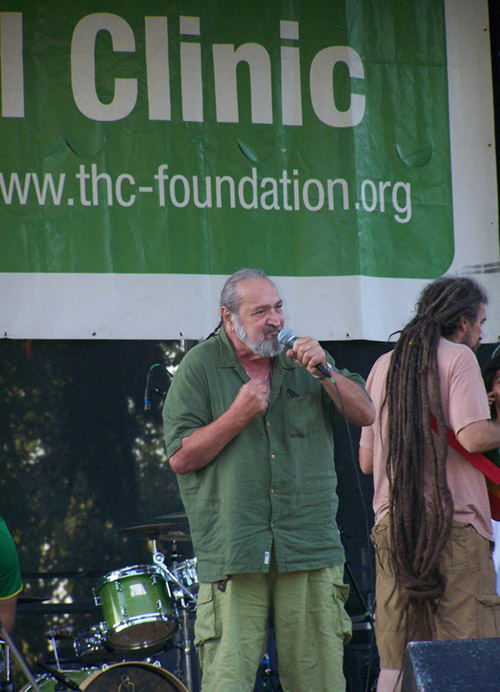
What changes when we look at cannabis through the objects people made from it?
Jack Herer’s The Emperor Wears No Clothes, first printed in May 1985, brought hemp’s material uses into an argument about prohibition. Its scope moves between agriculture, industry, medicine and politics. This feature follows two of those threads: rope and paper.1
Read it as an invitation to investigate. A persuasive book can make an overlooked subject compelling; the documents behind it let us examine the detail for ourselves. Here, brief excerpts sit beside museum records and an original agricultural report.
01 / The rope that mattered.
“Nor was hemp use restricted to the briny deep…”
The line carries the reader from ships towards the many other uses of the plant. Before leaving the waterfront, however, it is worth pausing over what a ship actually needed: dependable cordage, made in considerable quantities.
The USS Constitution Museum describes a maritime industry supported by long rope-making buildings called ropewalks. Its account of the ship’s 1927–1931 restoration records approximately 40 miles of cordage and hemp standing and running rigging. The same account identifies cotton canvas sails.2
That distinction matters. Hemp’s importance to a particular vessel is supported by the record; it does not establish a percentage for every sail or rope used throughout maritime history. The detail makes the story more interesting, not less.
02 / The useful life of a stalk.
“Our ancestors were too thrifty to just throw anything away”
Herer uses the history of rag paper to connect worn materials with another useful life. A separate question concerns the woody pieces left after hemp fibre is removed: could these become paper too?
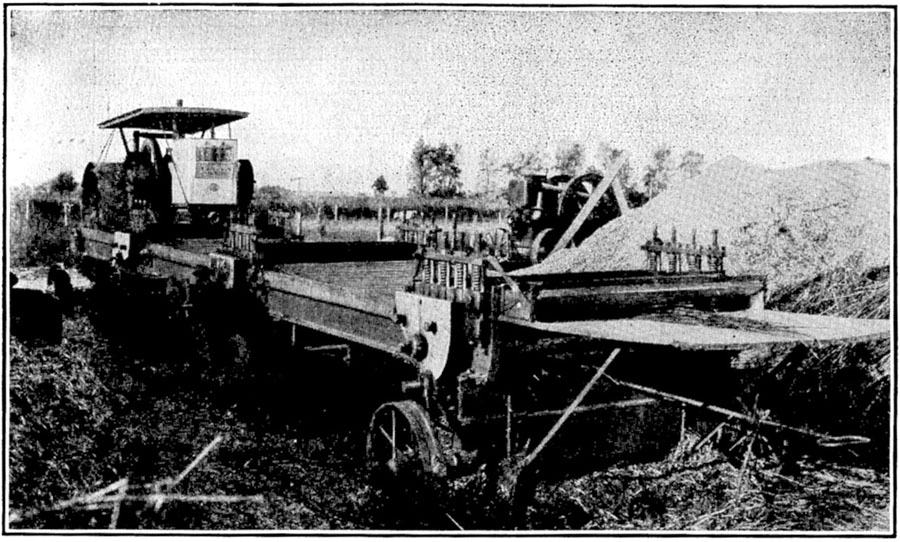
In 1916, Lyster H. Dewey and Jason L. Merrill examined that possibility in Hemp Hurds as Paper-Making Material. Their report describes the material, the trials and the practical questions of collecting, baling and transporting it. The authors treated demand, usable raw material and cost as essential to commercial success.3
Their work provides a solid starting point for understanding the opportunity. It also shows why a successful experiment and a dependable industry are different achievements. A photograph of a pile of hurds makes the question tangible: what can be made from this, and what would it take to do it consistently?
03 / When the camera turned to hemp.
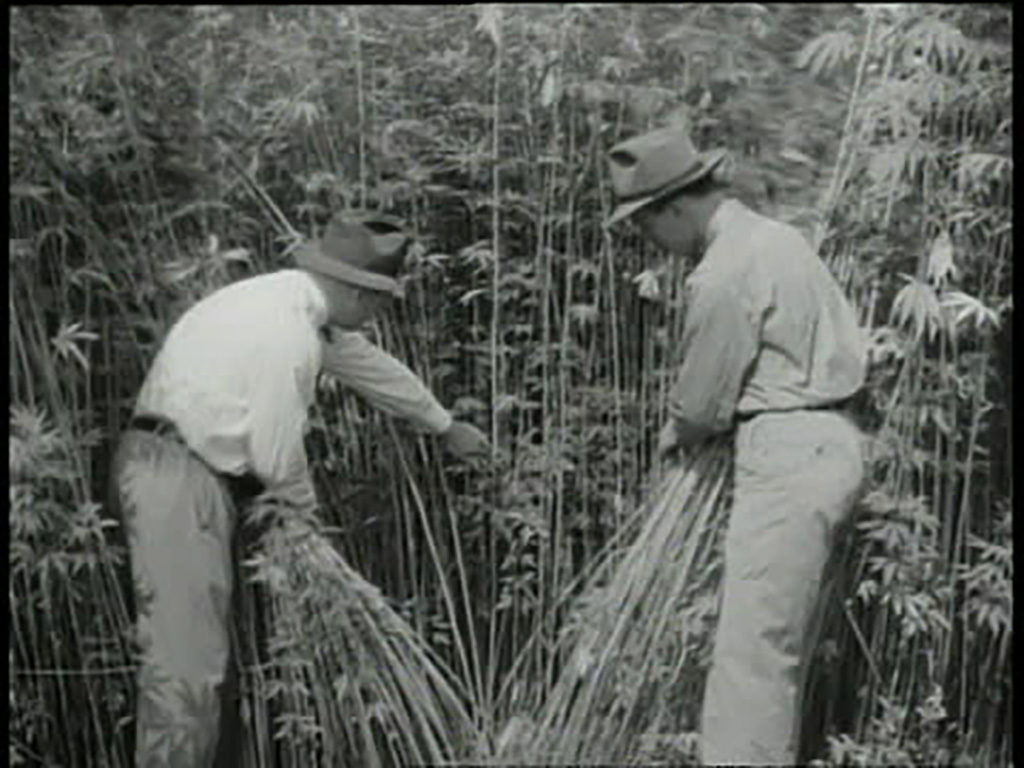
The National Agricultural Library holds a record for Hemp for Victory, a USDA film dating from around 1942. It covers cultivation, harvesting and fibre manufacture for military uses. The museum’s account explains its purpose: encouraging farmers to grow hemp for the war effort.4
The film is a primary source worth watching alongside the book. It shows what the government chose to encourage and explain at that moment. It cannot, on its own, account for every earlier or later policy decision.
A book to open. A trail to follow.
Our interest in Herer’s work is the curiosity it encourages: look beyond a familiar label, find the earlier document and ask what it actually tells us. Where a claim is broader than its evidence, we keep that difference visible.
Read a passage. Look at the object. Follow the reference. There is plenty here to discover without asking one plant—or one book—to explain everything.
Continue reading
Explore the book’s references.
The Electric Emperor archive preserves an older online edition. Wording and pagination vary between editions.
Browse the archived contents ↗Find an edition through Open Library ↗Follow the sources
Reading & image credits.
- Jack Herer, The Emperor Wears No Clothes. Publication and copyright history; contents; Chapter 2 passages linked above.
The archived publication history dates the first printing to May 1985. Two brief excerpts are reproduced for commentary; the remaining text is Green Nature 808’s editorial coverage. Book text © the respective rights holders.
- USS Constitution Museum: Ropemakers for the Navy, Part I and Part II (2016).
The figures and materials quoted here concern the identified restoration, not all ships or periods.
- Dewey & Merrill, Hemp Hurds as Paper-Making Material, USDA Bulletin 404, 14 October 1916. Bibliographic record.
The commercial discussion is in the introduction to the paper-manufacturing report. The photograph is Figure 2.
- National Agricultural Library: Hemp for Victory, circa 1942, USDA Motion Picture Film Collection, MS0522. National Archives catalogue record.
- Jack Herer photograph: D. Paul Stanford, 12 September 2009, Wikimedia Commons. Released into the public domain by the photographer. Film still: USDA, reproduced via USS Constitution Museum.
Photographs are historical records, not illustrations of Green Nature 808 operations. Inclusion implies no endorsement.

Sources checked 19 October 2026. Historical and editorial coverage; not medical guidance.